Lazarus
Lazarus of Bethany is the subject of a sign of Jesus in the Gospel of John, in which Jesus restores him to life four days after his death.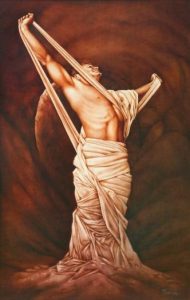
In the context of the seven signs in the Gospel of John, the raising of Lazarus at Bethany is the climactic narrative, exemplifying the power of Jesus “over the last and most irresistible enemy of humanity: death. For this reason, it is given a prominent place in the gospel.
The name Lazarus is frequently used in science and popular culture in reference to apparent restoration to life; for example, the scientific term Lazarus taxon denotes organisms that reappear in the fossil record after a period of apparent extinction, and also the Lazarus sign and the Lazarus syndrome.
The raising of Lazarus is recounted only in the Gospel of John (John 11:1–44) in the New Testament, as well as in the Secret Gospel of Mark (a fragment of an extended version of the Gospel of Mark) in which Jesus raises Lazarus of Bethany from the dead four days after his entombment.
In John, this is the last of the miracles that Jesus performs before the passion, crucifixion and his own resurrection.
Lazarus is introduced as a follower of Jesus. He is identified as the brother of the sisters Mary and Martha.
The sisters send word to Jesus that Lazarus, “he whom thou lovest,” is ill. Jesus tells his followers: “This sickness will not end in death. No, it is for God’s glory so that God’s Son may be glorified through it.”
Instead of immediately traveling to Bethany, according to the narrator, Jesus intentionally remains where he is for two more days before beginning the journey. The disciples are afraid of returning to Judea, but Jesus says: “Our friend Lazarus is asleep, but I am going to awaken him.” When the apostles misunderstand, he clarifies, “Lazarus is dead, and for your sake I am glad I was not there, so that you may believe.”
When Jesus arrives in Bethany, he finds that Lazarus is dead and has already been in his tomb for four days. He meets first with Martha and Mary in turn.
Martha laments that Jesus did not arrive soon enough to heal her brother (“if you had been here, my brother would not have died”) and Jesus replies with the well-known statement, “I am the resurrection, and the life: he that believeth in me, though he were dead, yet shall he live: And whosoever liveth and believeth in me shall never die.”
Martha affirms that she does truly believe and states, “Yes, Lord. I believe that you are the Messiah, the Son of God, who has to come into the world.”
Later the narrator here gives the famous simple phrase, “Jesus wept.”
In the presence of a crowd of Jewish mourners, Jesus comes to the tomb. Jesus asks for the stone of the tomb to be removed, but Martha interjects that there will be a smell.
Jesus responds, “Did I not tell you that if you believed, you would see the glory of God?”
Over the objections of Martha, Jesus has them roll the stone away from the entrance to the tomb and says a prayer. They take the stone away then Jesus looks up and says: “Father, I thank you that you have heard me. I know that you always hear me, but I said this for the benefit of the people standing here, that they may believe that you sent me.”
He then calls Lazarus to come out (“Lazarus, come forth!”) and Lazarus does so, still wrapped in his grave-cloths. Jesus then calls for someone to remove the grave-cloths, and let him go.
The narrative ends with the statement that many of the witnesses to this event “believed in him”. Others are said to report the events to the religious authorities in Jerusalem.
The Gospel of John mentions Lazarus again in chapter 12.
Six days before the Passover on which Jesus is crucified, Jesus returns to Bethany and Lazarus attends a supper that Martha, his sister, serves. Jesus and Lazarus together attract the attention of many Jews and the narrator states that the chief priests consider having Lazarus put to death because so many people are believing in Jesus on account of this miracle.
The miracle of the raising of Lazarus, the longest coherent narrative in John aside from the Passion, is the culmination of John’s “signs”. It explains the crowds seeking Jesus on Palm Sunday, and leads directly to the decision of Caiaphas and the Sanhedrin to kill Jesus.
Lazarus is honoured as a saint by those Christian churches which keep the commemoration of saints, although on different days, according to local traditions.
In Christian funerals the idea of the deceased being raised by the Lord as Lazarus was raised is often expressed in prayer.
Collect for Lazarus
Almighty God, who granted life to Lazarus after four days in the tomb, revealing your power over death,
Thank you for his unwavering faith and the love shared between him, Martha, and Mary, which welcomed Jesus into their home.
Grant us, like Lazarus, the hope of new beginnings. May we rise from despair and doubt, clinging to your promise of eternal life.
Remind us that even in our darkest moments, your love endures. Help us to face challenges with courage and trust, knowing that you hold us in your hands.
Deepen our faith in your power to overcome death, both physical and spiritual.
Through Jesus Christ our Lord, who conquered death and brought us hope, who lives and reigns with you and the Holy Spirit, one God, forever and ever. Amen.
With thanks to Wikipedia and Google Gemini
Joseph of Arimathea
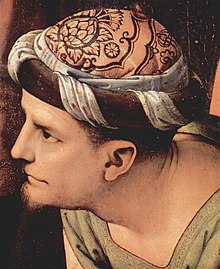 Joseph of Arimathea was, according to all four canonical gospels, a Pharisee who assumed responsibility for the burial of Jesus after his crucifixion.
The historical location of Arimathea is uncertain, although it has been identified with several towns.
A number of stories that developed during the Middle Ages connect him with Glastonbury, England, and also with the Holy Grail legend.
Matthew 27 describes him simply as a rich man and disciple of Jesus, but according to Mark 15, Joseph of Arimathea was “a respected member of the council, who was also himself looking for the kingdom of God”. Luke 23 adds that he “had not consented to their decision and action”.
According to John 19, upon hearing of Jesus’ death, this secret disciple of Jesus “asked Pilate that he might take away the body of Jesus, and Pilate gave him permission.”
Joseph immediately purchased a linen shroud and proceeded to Golgotha to take the body of Jesus down from the cross. There, according to John 19:39–40, Joseph and Nicodemus took the body and bound it in linen cloths with the spices (myrrh and aloes) that Nicodemus had brought.
The disciples then conveyed the prepared corpse to a man-made cave hewn from rock in a garden nearby. The Gospel of Matthew alone suggests that this was Joseph’s own tomb.
The burial was undertaken speedily, “for the Sabbath was drawing on”.
Although a series of legends developed during the Middle Ages (perhaps elaborations of early New Testament apocrypha) that tied this Joseph to Britain as well as the Holy Grail, he is not currently on the abbreviated liturgical calendar of the Church of England, although he is on the calendars of some churches of the Anglican Communion, such as the Episcopal Church, which commemorates him on 1st August.
Collect for Joseph of Arimathea
O God of steadfast courage and quiet devotion,
We remember with gratitude your servant Joseph of Arimathea, who found boldness in his faith to claim the body of your Son, Jesus Christ, even amidst fear and persecution.
We marvel at his selfless act, offered in silent reverence while others fled. We admire his courage in stepping forward at such a vulnerable time, a testament to his unwavering belief in your love and sacrifice.
Grant us, like Joseph, the grace to find faith in unexpected places. Inspire us to be instruments of your compassion, even when faced with opposition or uncertainty.
Let us be willing to stand out from the crowd, to speak up for what is right, and to offer comfort to those in need. Grant us the courage to bear witness to your love, even when the path seems lonely or difficult.
And as we remember Joseph’s role in preparing Christ for burial, may we anticipate with hope the promise of your resurrection, knowing that in you, death does not have the final say.
Through Jesus Christ our Lord, who conquered death and brought us life, who lives and reigns with you and the Holy Spirit, one God, forever and ever. Amen.
With thanks to Wikipedia and Google Gemini