Ambrose of Milan

Ambrose of Milan (c 339 – 4th April 397) was a theologian and statesman who served as Bishop of Milan from 374 to 397.
He expressed himself prominently as a public figure, fiercely promoting Roman Christianity against Arianism and paganism.
Ambrose was born into a Roman Christian family in the year 339, in Augusta Treverorum (modern Trier) the capital of the Roman province of Gallia Belgica in what was then northeastern Gaul and is now in the Rhineland-Palatinate in Germany.
A legend about Ambrose as an infant recounts that a swarm of bees settled on his face while he lay in his cradle, leaving behind a drop of honey. His father is said to have considered this a sign of his future eloquence and honeyed tongue.
Bees and beehives often appear in the saint’s symbology.
The family moved to Rome, where Ambrose studied literature, law, and rhetoric. He then followed in his father’s footsteps and entered public service.
Ambrose was serving as the Roman governor of Aemilia–Liguria in Milan when he was unexpectedly made Bishop of Milan in 374 by popular acclamation. As bishop, he took a firm position against Arianism and attempted to mediate the conflict between the emperors Theodosius I and Magnus Maximus. Tradition credits Ambrose with developing an antiphonal chant, known as Ambrosian chant, and for composing the “Te Deum” hymn, though modern scholars now reject both of these attributions.
Ambrose’s authorship on at least four hymns, including the well-known “Veni redemptor gentium“, is secure; they form the core of the Ambrosian hymns, which includes others that are sometimes attributed to him. He also had a notable influence on Augustine of Hippo (354–430), whom he helped convert to Christianity.
Western Christianity identified Ambrose as one of its four traditional Doctors of the Church. He is considered a saint by the Catholic Church, Eastern Orthodox Church, Anglican Communion, and various Lutheran denominations, and venerated as the patron saint of Milan and beekeepers.
Most historians agree that he was the personification of his era. This would make Ambrose a genuinely spiritual man who spoke up and defended his faith against opponents, an aristocrat who retained many of the attitudes and practices of a Roman governor, and also an ascetic who served the poor.
Collect for Ambrose of Milan
O God, who endowed your servant Ambrose with grace to boldly proclaim your truth, wisdom to guide your Church, and unwavering courage in the face of opposition:
Grant to your bishops and pastors such excellence in leadership, steadfastness in faith, and boldness in witness, that your people may grow in knowledge of you and stand firm in your service;
through Jesus Christ our Lord, who lives and reigns with you and the Holy Spirit, one God, now and forever. Amen.
With thanks to Wikipedia and Google Gemini
William Byrd
William Byrd (c 1540 – 4th July 1623) was an English Renaissance composer.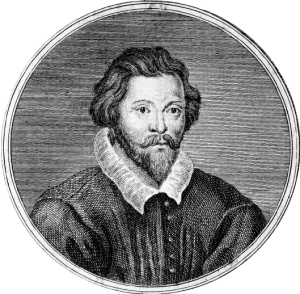
Considered among the greatest composers of the Renaissance, he had a profound influence on composers from both England and on the Continent, and is often considered along with John Dunstaple, Thomas Tallis and Henry Purcell as one of England’s most important composers of early music.
Byrd wrote in many of the forms current in England at the time, including various types of sacred and secular polyphony, keyboard, and consort music. He produced sacred music for Anglican services, but during the 1570s became a Roman Catholic, and wrote Catholic sacred music later in his life.
William Byrd was probably born in London, the third surviving son of Thomas Byrd and his wife, Margery. No record of his birth has survived, and the year of his birth is not known for certain, but a document dated 2nd October 1598, and written by William Byrd, states that he is “58 yeares or ther abouts”, making the year he was born to be 1539 or 1540.
The Byrd family was a musical and relatively wealthy family. William had two older brothers, Symond and John, who became London merchants and active members of their respective livery companies.
One of his four sisters, Barbara, was married to a maker of musical instruments who kept a shop; his three other sisters, Martha, Mary and Alice, were probably also married to merchants.
Byrd’s first known professional employment was his appointment in 1563 as organist and master of the choristers at Lincoln Cathedral. Residing at what is now 6 Minster Yard Lincoln, he remained in post until 1572.
His period at Lincoln was not entirely trouble-free, for on 19th November 1569 the Dean and Chapter cited him for ‘certain matters alleged against him’ as the result of which his salary was suspended. Since Puritanism was influential at Lincoln, it is possible that the allegations were connected with over-elaborate choral polyphony or organ playing.
A second directive, dated 29th November, issued detailed instructions regarding Byrd’s use of the organ in the liturgy.
In 1572, following the death of the composer Robert Parsons (who drowned in the Trent near Newark on 25th January of that year), Byrd obtained the post of Gentleman of the Chapel Royal, the largest choir of its kind in England.
The appointment, which was for life, came with a good salary.
Byrd’s appointment at the Chapel Royal increased his opportunities to widen his scope as a composer and also to make contacts at the court of Queen Elizabeth. The Queen was a moderate Protestant who eschewed the more extreme forms of Puritanism and retained a fondness for elaborate ritual, besides being a music lover and keyboard player herself.
Byrd’s output of Anglican church music is small, but it stretches the limits of elaboration then regarded as acceptable by some reforming Protestants who regarded highly wrought music as a distraction from the Word of God.
In 1575 Byrd and Tallis were jointly granted a monopoly for the printing of music and ruled music paper for 21 years, one of a number of patents issued by the Crown for the printing of books, which was the first known issuing of Letters Patent.
The two monopolists took advantage of the patent to produce a grandiose joint publication under the title Cantiones quae ab argumento sacrae vocantur. It was a collection of 34 Latin motets dedicated to the Queen herself, accompanied by elaborate prefatory matter.
There are 17 motets each by Tallis and Byrd, one for each year of the Queen’s reign.
The Cantiones were a financial failure. In 1577 Byrd and Tallis were forced to petition Queen Elizabeth for financial help, pleading that the publication had “fallen oute to oure greate losse” and that Tallis was now “verie aged”. They were subsequently granted the leasehold on various lands in East Anglia and the West Country for a period of 21 years.
From the early 1570s onwards Byrd became increasingly involved with Catholicism, which became a major factor in his personal and creative life.
Byrd’s staunch adherence to Catholicism did not prevent him from contributing memorably to the repertory of Anglican church music.
Byrd’s small output of church anthems ranges in style from relatively sober early examples (O Lord, make thy servant Elizabeth our queen (a6) and How long shall mine enemies (a5) ) to other, evidently late works such as Sing joyfully (a6) which is close in style to the English motets of Byrd’s 1611 set.
During his later years Byrd also added to his output of consort songs including elegies for public figures such as the Earl of Essex (1601), the Catholic matriarch and viscountess Montague Magdalen Dacre (With Lilies White, 1608) and Henry Prince of Wales (1612).
Byrd died of heart failure on 4th July 1623, which was noted in the Chapel Royal Check Book in a unique entry describing him as “a Father of Musick”.
Byrd’s output of about 470 compositions amply justifies his reputation as one of the great masters of European Renaissance music. Perhaps his most impressive achievement as a composer was his ability to transform so many of the main musical forms of his day and stamp them with his own identity.
Collect for William Byrd
O God of harmony and beauty, whose servant William Byrd adorned your Church with music of surpassing loveliness:
Grant that we, inspired by his example, may use the gifts you have given us to enrich your worship and lift our hearts in praise;
through Jesus Christ our Lord, who lives and reigns with you and the Holy Spirit, one God, now and forever. Amen.
With thanks to Wikipedia and Google Gemini